Year-Round Harvesting: Planning Succession Crops for Continuous Yield
A well-planned market garden feeds people in January, not only in July. That is the whole idea behind succession sowing: instead of one flush of lettuce that all hearts up in the same ten days, you spread your sowings across the calendar so there is always something worth cutting. It sounds like more work. Done properly, it is less — you sow smaller amounts, more often, and you stop gambling your whole season on a single date.
What follows is the scheduling side of that: how to decide what to sow, when to sow it, and where the next sowing goes once the last one is out of the ground.
Start With a Harvest Calendar, Not a Seed Order
Most growers buy seeds first and worry about timing later. Reverse the order. Draw twelve boxes, one for each month, and write down what you want to be harvesting in each. Be realistic rather than aspirational. A temperate-climate example might read: January and February — leeks, kale, chard, stored roots, hardy salad under cover. May — the first radishes, overwintered spinach, spring onions. July — courgettes, the first French beans, new potatoes. October — maincrop carrots, squash, the last of the outdoor tomatoes.
Once those boxes are filled, work backwards. Most seed packets give days to maturity, but that figure assumes decent conditions: it is counted from transplanting for brassicas and lettuce, from sowing for roots and beans. Add a buffer. Ten to fourteen days is a sensible cushion in spring and autumn; less in the heat of midsummer, more for anything direct-sown into cold ground. If a lettuce takes sixty days from transplanting and you want it cut in the first week of June, the seed needs to be sown in late March and planted out in late April. That is the arithmetic that turns a wish list into a plan.
Three Kinds of Crops, Three Different Plans
Not every crop belongs in a succession. Sorting them into three groups stops you from over-scheduling.
Quick crops
Radish, salad mix, baby leaf, spring onions, turnip, coriander. These occupy a bed for a few weeks and are gone. They are the easiest things to slot into gaps, and they respond best to short, frequent sowings.
Steady crops
Headed lettuce, carrots, beetroot, bush beans, sweetcorn, calabrese. Each sowing gives a defined harvest window of two to four weeks, and you need a new sowing before the previous one finishes.
Standing crops
Kale, chard, leeks, parsnips, purple sprouting broccoli, perennial herbs. One sowing, harvested over many months. These are what carry you through winter, and no amount of clever succession work will replace them. Give them the best ground and plan them first.
Turning the Calendar Into Sowings
The rule that keeps a schedule honest is this: your sowing interval should be shorter than the length of time you can harvest from one sowing. If a lettuce planting stays cuttable for three weeks, sowing every ten to fourteen days gives you a slight overlap instead of a gap. If you sow every three weeks, you will have hungry weeks in between.
Useful intervals for a mixed market garden:
- Salad mix and baby leaf: every 7–10 days through the growing season, thinning to fortnightly in midsummer heat
- Radish: every 7–10 days in spring and autumn; skip the hottest weeks unless irrigation is reliable
- Headed lettuce: every 10–14 days
- Spinach: every 14 days in spring and again from late summer
- Carrots and beetroot: every 3 weeks, pausing in midsummer if root fly is a problem on your site
- Bush beans: every 2–3 weeks until midsummer, then stop
- Sweetcorn: two or three sowings, two weeks apart, and no more
A simple way to build the plan
- List every crop you intend to sell or eat, with its target harvest months.
- Convert each target into a sowing date using days to maturity plus your buffer.
- Group sowings into fixed weekly blocks — one sowing morning per week beats scattered half-days.
- Assign each sowing to a bed, and reserve roughly a fifth of your space for the unexpected.
- Write the variety and sowing date on a stake at the end of the bed, where you will actually see it.
- Review the plan once a month, in the field, with a pencil in hand.
Where the Next Sowing Goes
Space is usually the limiting factor, so treat the gaps between crops as part of the plan rather than an afterthought. Relay planting is the standard trick: sow quick salad or radish between rows of young kale or Brussels sprouts, knowing the fast crop will be cut before the standing crop needs the room. Lettuce planted two or three weeks after sweetcorn goes out will heart up before the canopy closes overhead. A bed of early potatoes can be followed by a sowing of carrots or a late planting of leeks in the same season.
Undersowing works the other way round. Scatter a leafy green or a green manure under a crop that is nearly finished, and it will establish while the old crop is still standing. Timing matters more than precision here — the aim is simply to have the next thing already growing before the last thing is cleared.
Stretch the Season at Both Ends
Succession sowing gives you the middle of the year. Covers and hardy varieties give you the edges. In late summer and early autumn, sow specifically for winter and spring: hardy salad leaves such as mizuna, claytonia and winter purslane, overwintering broad beans, garlic, and a late sowing of carrots for a spring crop. A low tunnel or a layer of fleece can move a harvest window by several weeks at either end of the year, and it is usually cheaper than heating anything.
Spring works the same way in reverse. Rather than waiting for the soil to warm, use overwintered plants and early sowings under cover to bridge the gap until the first outdoor crops are ready. The goal is a continuous line, not a perfect one.
Keep Records You Will Actually Use
A succession plan only improves if you note what happened. On a stake or in a notebook, record the sowing date, the variety, when the crop first became harvestable, and when you cleared the bed. Two lines per planting is enough. At the end of the season, the gaps in your supply will be obvious from those notes, and next year's plan becomes a matter of shifting a few dates rather than starting from scratch.
Begin With Fewer Successions Than You Think You Need
The temptation is to schedule everything, everywhere, from the first year. Resist it. Pick three or four crops with a genuine market — salad, radish, beans, carrots — and run them on a steady fortnightly rhythm. Add a solid block of standing crops for winter. That alone will keep produce moving out of the gate for most of the year. Once the rhythm feels automatic, add the next crop, and the next. A simple plan you follow beats an elaborate one you abandon in June.
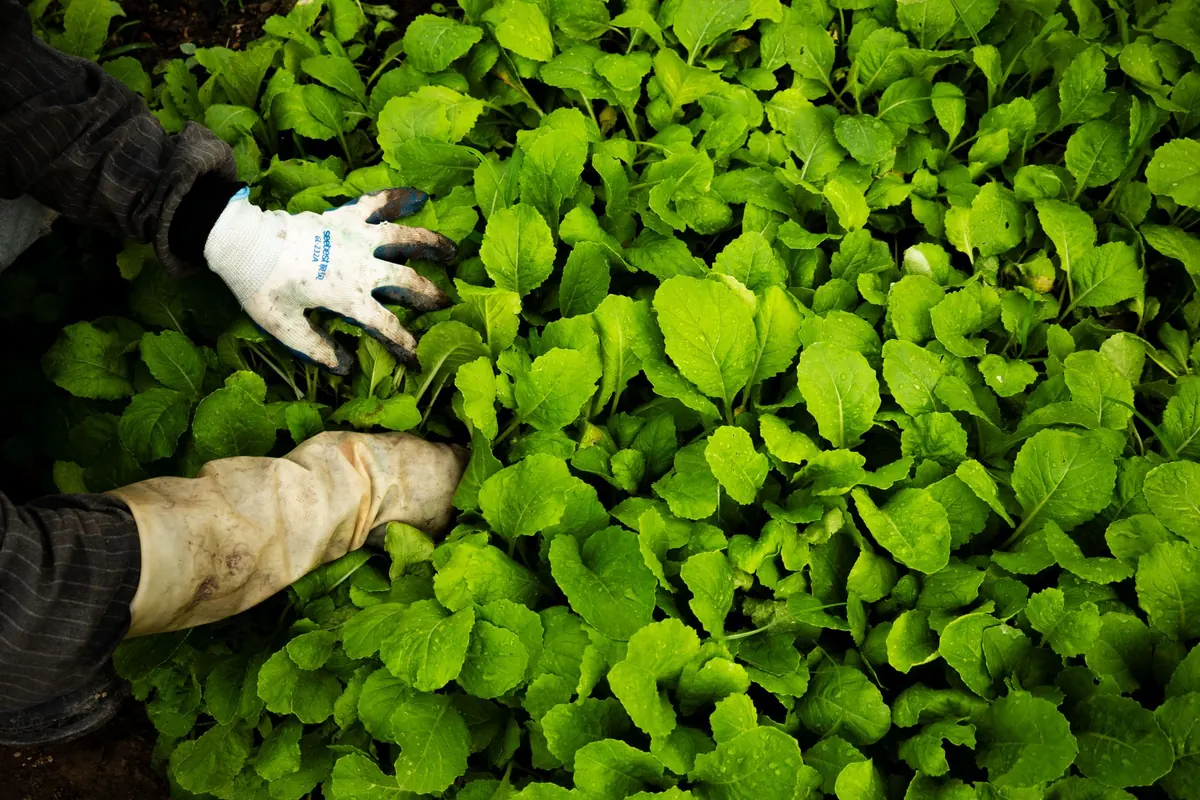
Photo: rongkum Li / Pexels

A Beginner's Guide to Soil Testing for Vegetable Gardens
Learn how to take a representative soil sample, read a lab report without panic, and amend your beds in...

No-Till vs. Tillage in Market Gardening: Pros and Cons
A practical comparison of no-till and tillage for market gardeners, covering soil health, weed pressure,...